


The faculty of the Division of Gastroenterology are involved in a variety of clinical, translational and basic research projects in the digestive tract, liver and pancreas. They work closely with the University of Arizona Cancer Center, the only NCI-designated cancer center in the state. The UA has top rated researchers and unparalleled related resources in optical sciences and biomedical engineering.
The following list gives a selection of research interests of current gastroenterology faculty members.
- Barrett’s Esophagus — Karyometry, or study of tissue culture cells, to identify the presence of or predict future development of dysplasia; this research involves development of 3-D in-vivo multiphoton imaging.
- Tumor Imaging — Use of receptor-targeted microbubbles for the identification of cancer at surgical margins. This project involves ligand development, micro-/nano-bubbles, multi-photon microscopy, optical coherence tomography and murine models of cancer.
- Novel Imaging Device Development — New optical instrument design and prototype development to enhance vision beyond the capability of human eyes. Close collaboration with UA College of Optical Sciences. Examples of this include the real-time imaging of eosinophils, direct imaging of aberrant crypts and optical devices that offer unprecedented fields of view.
- Colorectal Cancer — Clinical and translational research on prevention and early detection of colorectal cancer. This includes high throughput studies using human biospecimens to study the molecular pathology and genetic epidemiology of colorectal cancer, phase III chemoprevention studies for its prevention and comparative effectiveness research on methods for colorectal cancer screening.
- Advanced Endoscopy — Pancreatic cystic lesions, double-balloon enteroscopy.
- Tissue Acquisition and Repository - correlate specific genes, proteins, nucleic acids or bacterial species with gastrointestinal, pancreato-biliary and hepatology disorders, including but not limited to cancer.
Liver Institute 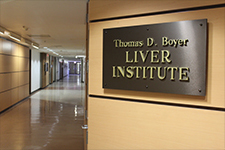
Clinical research activities of the Thomas D. Boyer Liver Institute include trials to evaluate performance of FDA-approved and prospective drugs for treatment of Hepatitis C. Various categories of drugs under investigation include viral protease inhibitors, cytokines and drugs to support blood platelet levels. In addition, a trial to evaluate a vaccine against Hepatitis C is under way. Several trials to evaluate drugs for the treatment of NASH, non-alcoholic steohepatitis, and for the prevention of Hepatic carcinoma (a type of cancer) also are being conducted.
Contact the institute at (520) 626-3005 or ebonorand@arizona.edu for additional information.
Current Clinical Trials
Clinical trials often involve a research study conducted to evaluate a medical procedure or medical product, such as a drug. Not all University of Arizona studies involve drugs or interventions. Some studies use surveys or evaluate medical records to find new and better ways to help people. Others recruit healthy subjects, or controls, to better evaluate and compare results with those of non-healthy subjects. For UA clinical research studies currently accepting subjects, see the following topics related to our Division:
- Bladder Cancer
- Bowel Obstruction
- Colorectal Cancer
- Crohn's & Colitis
- Digestive
- Gastrointestinal
- Hepatic events
- Hepatitis
- Liver
- Pancreatic
Find other clinical trials at the UArizona Health Sciences
How to Participate
Whether you are a potential candidate to participate as a patient or subject in the study, you would like to participate as a "healthy volunteer" for the control group or you’re a research or clinical professional interested in collaborating with the research team—just contact the study coordinator or principal investigator listed for each individual clinical research study above.
You may also reach out directly to the office of the Division of Gastrenterology and Hepatology at (520) 626-3334 or ebonorand@arizona.edu for additional information.